The Idea That Started Everything
In 2011 I was a freshman at Trinity College on a premed track. I won a Davis Projects for Peace grant with two classmates — $10,000 plus another $4,850 we raised from the college — to go to rural Karnataka, India and build rainwater collection systems on schoolhouses. I came back and changed my major to international studies.
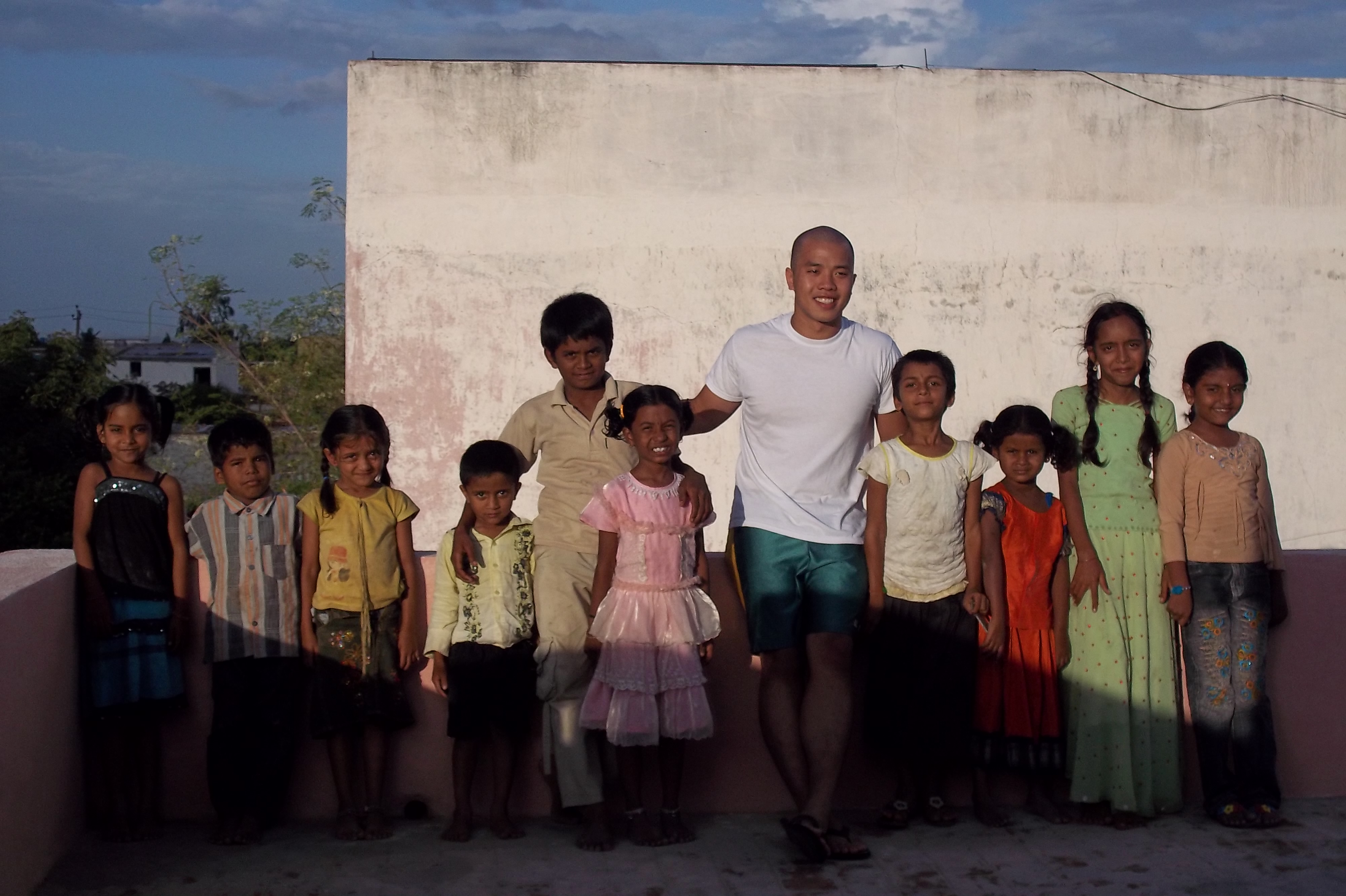
The problem was fluoride. The groundwater in Pavagada had fluoride levels high enough to cause fluorosis — a disease that destroys teeth and bones. The kids at these schools were drinking it every day because there was nothing else.
We worked with Biome Trust, who connected us with BIRD K, a local NGO with deep experience in fluoride-affected areas. Together we built underground collection systems at five schools. Rooftop gutters into underground tanks made of bricks and cement, with hand pumps for distribution. We spent a month on-site. We formed student committees to maintain the systems after we left.
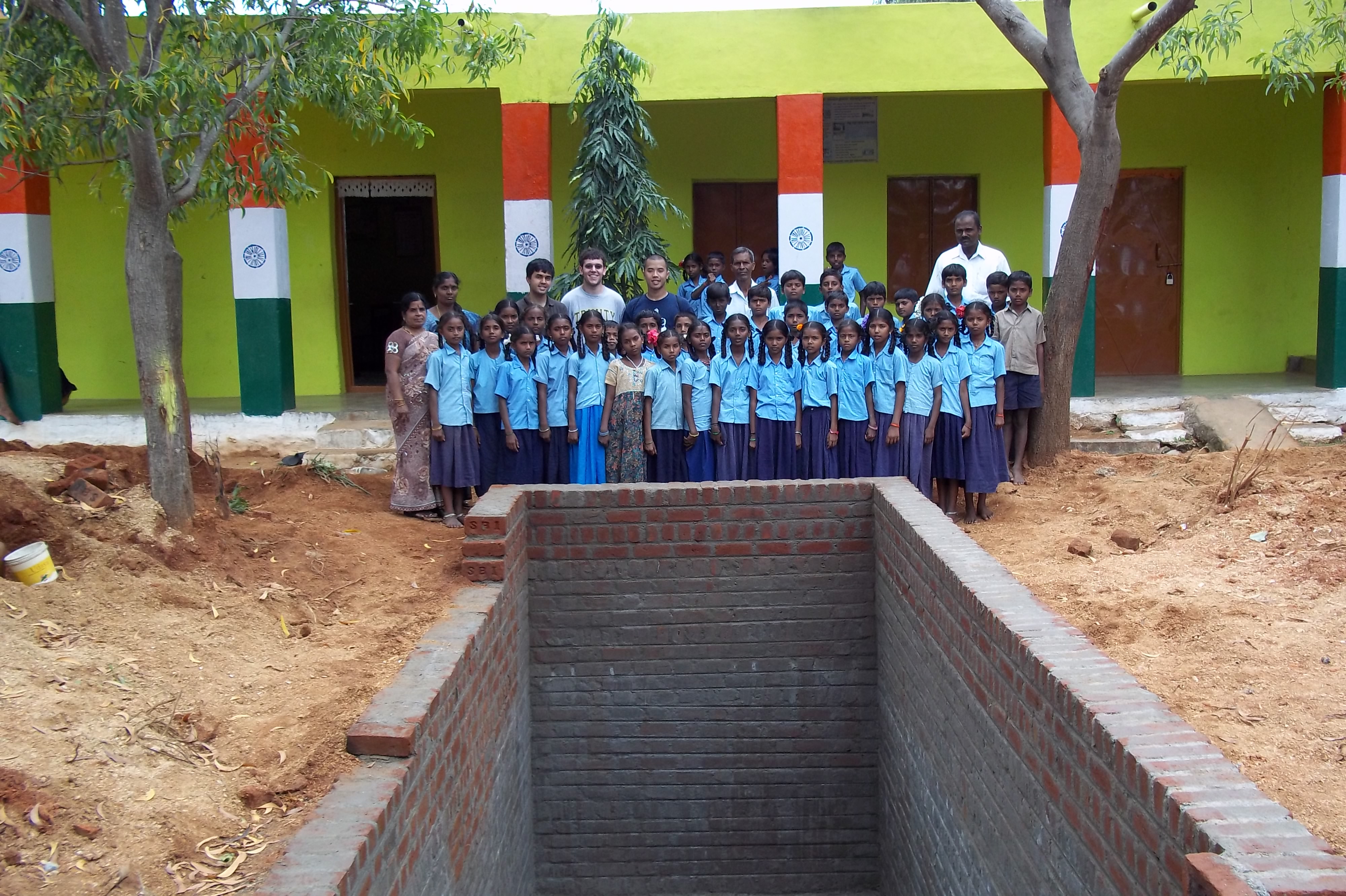
I was nineteen. I remember a girl with brown spots on her front teeth that matched her skin. I promised myself I would come back and solve this problem. It was a wish that I would become more.
The Years Between
After college I chose Main Street over Wall Street. Most of my classmates went into finance in New York. I decided I needed to learn how to sell — because every solution, no matter how good, has to be sold as an idea to every stakeholder involved. So I cut my teeth. Car salesman for two months. Financial advisor. Senior loan officer at US Bank, where I hit top 3% in the company. Then I consulted for a family friend's business in Houston — systematized their processes, opened digital revenue streams, helped bring in an additional $350K.
The summer after graduation I'd also read the Bitcoin whitepaper. It reframed how I understood the world. Not the technology — the idea that the monetary system governing modern society is an instrument of human creation, not a natural law. That systems shape behavior, and if you design the incentives differently, you get different outcomes. I didn't know what to do with that yet. But it stayed with me.
By 2016 I fell back into the rabbit hole — Ethereum, smart contracts, the ICO wave. The idea that you could codify cooperation into a protocol. That's when the thing I'd seen in Karnataka and the thing I'd read in the Bitcoin whitepaper started to converge.
DRYP
The water problem isn't water. Water is abundant globally — it's renewable, it falls from the sky. The problem is that there's no incentive for capital investment in water infrastructure. Government priorities go to industries that generate tax revenue and political leverage — not rainwater systems for rural villages. Charities have goodwill but face a perpetual lack of capital. Corporations stick to ventures with safe returns — like bottling — because real innovation in water carries too much risk. And individuals who collect their own water don't share it, because there's no reason to.
2.1 billion people without clean water. Not because the resource doesn't exist — because the structure doesn't reward producing and distributing it.
By 2018 I had made money in early Ethereum, moved to Los Angeles, and spent two years trying to figure out how to build something that addressed the structure, not just the symptom. I assembled a team — a CEO who had raised $500 million across tech and entertainment, a CTO from Israeli Red Beret with a CS degree, a PhD in supply chain optimization, a water scientist with a doctorate in atmospheric science. I hired Manatt, one of the top law firms in LA.
The project was called DRYP. A decentralized water utility platform — IoT sensors verifying water quality, blockchain handling trust, economics designed so that everyone in the supply chain profits from producing clean water. The concept got a name five years later: DePIN, Decentralized Physical Infrastructure Networks. People raised millions for projects built on the same thesis.
I spent about $150,000. I wrote a 19-page whitepaper. I believed completely.
What Went Wrong
Two things.
The scope was enormous. Hardware plus blockchain plus international NGO partnerships plus regulatory compliance across multiple countries. One founder's crypto earnings wasn't enough runway. It needed $5 million and five years.
But the harder thing took me years to see. I showed up in LA with money and a vision, and instead of building, I got pulled into other people's orbits. I was presenting DRYP to investors and operators, but they wanted to recruit me for their projects instead. I let it distract me. The noble goal became a badge I wore while drifting from the actual work.
When you attach yourself to an idea of who you are, the idea starts making your decisions. I was so invested in being the person who was going to solve water that I couldn't see I'd stopped doing the work that would actually solve it.
I ran out of money. The project didn't take off. I went home to Lincoln, Nebraska.
Learning to Code
I was broke again. Every startup I'd tried had burned through capital. I was done with the crypto industry — the promise I'd seen in the technology had turned into speculation.
But I couldn't let go of the technical gap. Every time I'd tried to build something, I'd had to rely on other people to execute. And relying on other people to execute your vision when you can't evaluate their work or understand the tradeoffs doesn't work.
So I started learning CSS. Then JavaScript. Then I got mentored by a developer who'd written backends for billion-dollar companies and built one of the first Blackberry apps. He gave me debugging tasks, DevOps work, data manipulation. I was his hands when he got tired.
Since 2020 I've shipped over ten production products. Each one built on the last.
Where This Leaves Me
The lesson from DRYP wasn't just that I needed technical skills. It was about how problems work.
What those kids in Karnataka were experiencing wasn't just a water problem. It was the visible surface of a system — economic incentives, political structures, infrastructure gaps, geographic constraints — all interacting to produce a specific outcome. You can install rainwater systems on five schoolhouses and help those specific kids. But the problem regenerates because the structure that produced it hasn't changed.
Real problems are systemic. What people experience locally has deep underlying causes. And understanding the problem deeply — not just the symptom but the structure — is what lets you see where a solution could actually work.
That's what I've been practicing since. Every system I've built — an entity glossary that maps relationships in a crypto ecosystem, an agency platform that models how design work actually flows, an agent harness that decomposes goals into coordinated tasks — is practice in understanding how structures produce outcomes, and designing interventions that change them.
I think about the girl with the brown spots on her teeth. I understand the problem better now than I did when I had the money and the team and the whitepaper. Next time I have both, I won't waste either.